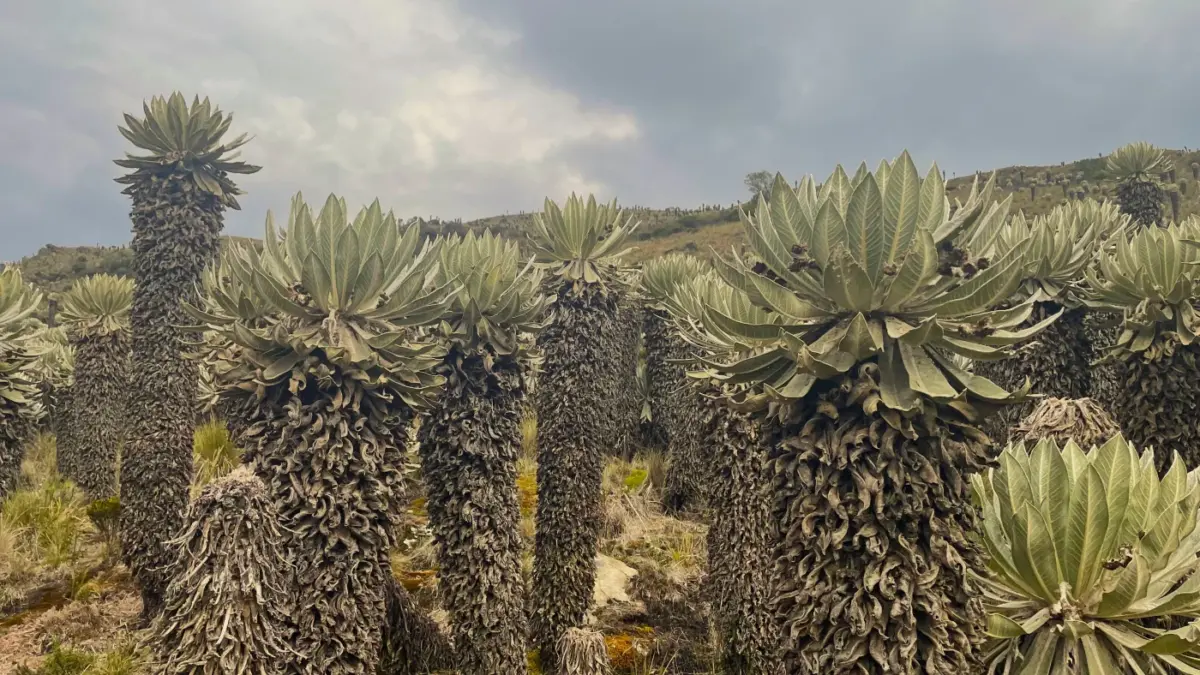
Colombia frailejones, Digimart Global (Monguí, Colombia): Frailejones are iconic high-altitude plants of Colombia’s Andes Mountains, and they play a central role in protecting the páramos, the high mountain wetlands that supply major rivers and much of the country’s water. According to a report published by NPR, the plants’ woolly fuzz shields them from cold and absorbs water from cloud cover, helping keep moisture in the páramos.
The plants and the ecosystems they inhabit face mounting pressure. NPR reports that farmers, cattle ranchers and coal miners are gradually pushing higher into the Andes, while climate change is warming the mountains and allowing invasive species to survive at higher altitudes, disrupting fragile ecosystems.
A species at risk
Mauricio Diazgranados, chief science officer at the New York Botanical Garden, told NPR that of nearly 150 frailejon species, two-thirds are at risk and 17 are endangered. He described them as a keystone species for maintaining the páramos and water production, adding that most frailejones are in trouble.
Historically, the plants were known to Indigenous Muisca people, who considered them sacred guardians of the water. The Spanish name frailejon means “big friar,” a reference to the way early explorers saw the shrubs emerging from the mountain fog.
Restoration efforts
NPR describes how Moisés Moreno, who runs a frailejon greenhouse near Monguí, once cleared the plants for farmland before changing course to study and restore the páramo ecosystem. He and his assistants lead volunteers on planting expeditions, where survival is uncertain because many seedlings die in the cold and grow only a few inches per year.
NPR also reports that Colombia’s National Parks agency and its armed forces have joined reforestation campaigns after wildfires scorched thousands of acres of frailejones, and that a popular cartoon character, Ernesto Pérez, has helped raise public awareness of the plant’s importance.