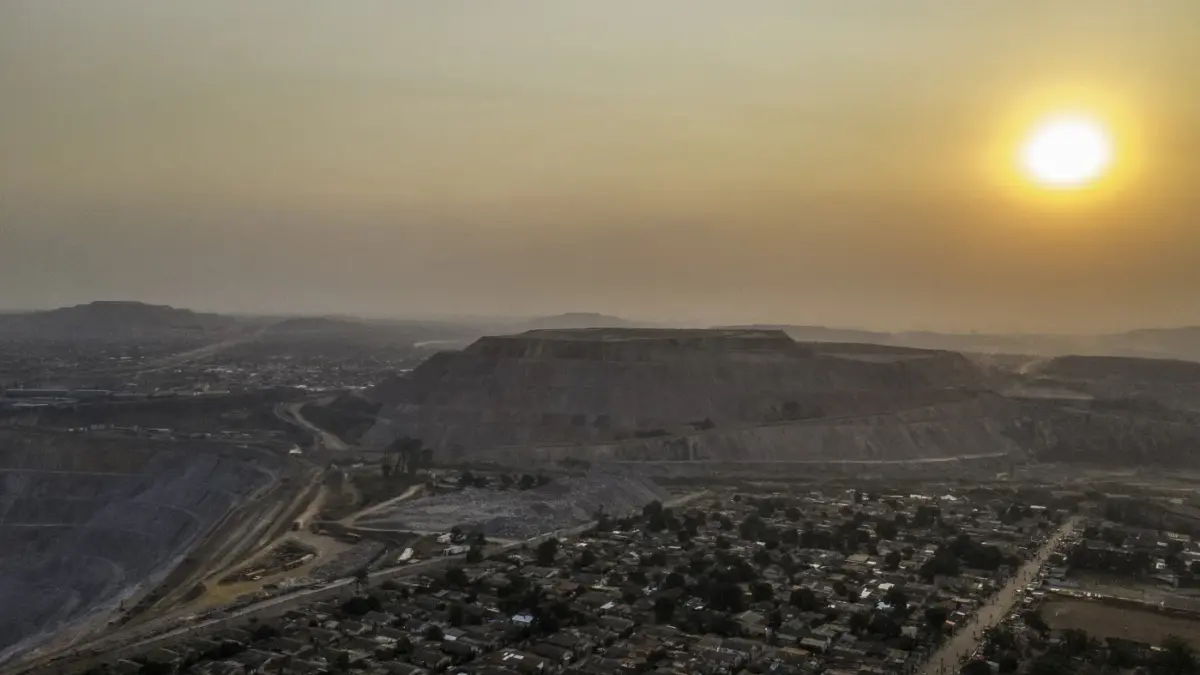
Congo mining pollution lawsuit, Digimart Global (Kolwezi, Democratic Republic of Congo): A group of 27 residents of Kolwezi, a city of more than 500,000 people in the heart of Congo’s copper belt, has filed a lawsuit against the Chinese-owned COMMUS copper and cobalt mine and the Congolese government. The plaintiffs, whose case began Nov. 3, allege that pollution from the mine has caused contaminated water, nosebleeds, skin rashes, miscarriages and birth defects.
The mine is owned by the Chinese multinational Zijin. The plaintiffs accuse the government of failing to enforce environmental regulations.
According to NPR’s report, several plaintiffs asked not to be identified, fearing retribution from the company or authorities, and their lawyers are concerned about possible intimidation of the claimants.
The legal challenge follows a June study by the environmental research organisation Source International, carried out with the advocacy groups RAID and Afrewatch and scientists from Congo’s University of Lubumbashi. The study found fine particulate matter (PM2.5) levels in Kolwezi that were three to six times the World Health Organization’s air quality guideline, with the highest concentrations recorded near the COMMUS mine.
The researchers also found residue of copper, cobalt and manganese in dust samples, which they said pointed to mining waste as the main source. The study did not directly examine health impacts and recommended formal epidemiological research.
Local health workers have also raised concerns. Nurse Héritier Bukassa told NPR that he had referred four babies born with congenital malformations, mostly cleft palates, to hospitals this year, and that women in the area suffer high rates of miscarriage.
These accounts have not been independently verified as caused by pollution.
The plaintiffs are seeking $1.3 million in compensation for health problems and medical expenses, and $5 million to restore the environment. RAID described the case as one of the most ambitious legal challenges yet brought by Congolese residents over industrial mining pollution, and said it could lead to other communities challenging mines in the future.
Zijin and Congo’s mining and environment ministries did not respond to NPR’s requests for comment. The Cobalt Institute, an industry lobby, said understanding pollution requires an evidence-based approach that considers all potential sources, and that companies carry out environmental monitoring and mitigation.