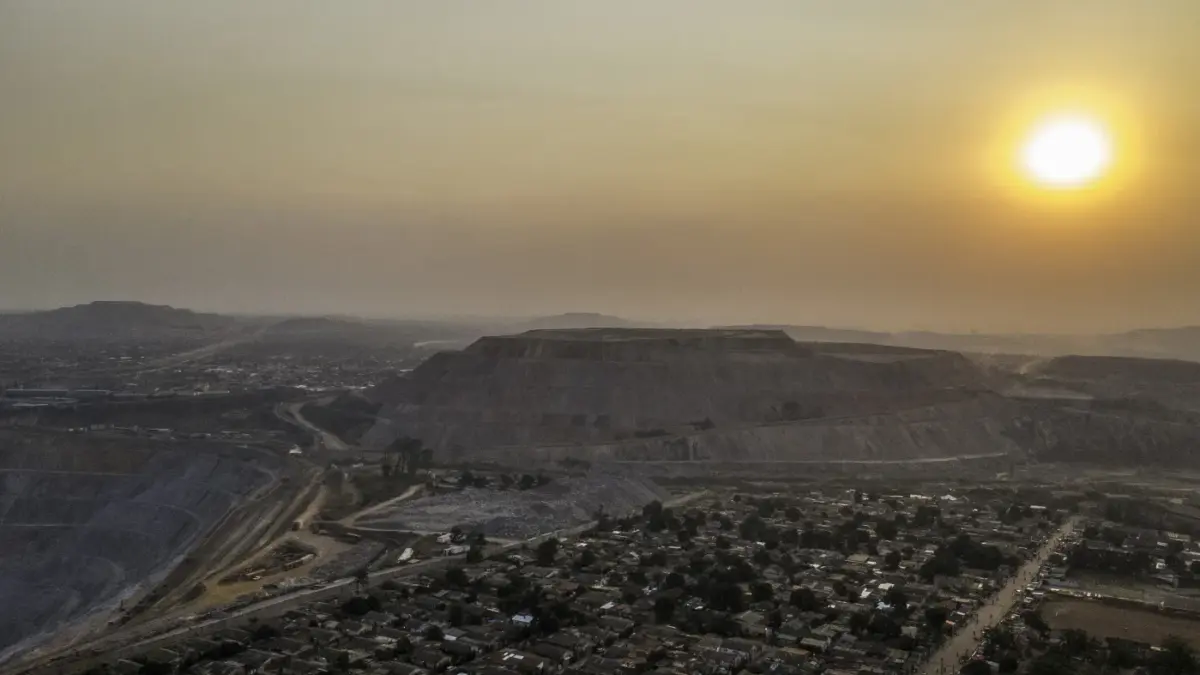
Congo mining pollution lawsuit, Digimart Global (Kolwezi, Democratic Republic of Congo): Residents of Kolwezi have filed a lawsuit against a Chinese-owned copper and cobalt mine, alleging that pollution from its operations has caused serious health problems in their community. The plaintiffs, who began the case on Nov. 3, number 27 in total and include a mother who says she has lost three children, two at birth and one after repeated nosebleeds.
The mine, known as COMMUS, is owned by Chinese multinational Zijin and lies in Kolwezi, a city of more than 500,000 people in the heart of the Democratic Republic of Congo’s copper belt. The plaintiffs are also suing the government, accusing it of failing to enforce environmental regulations.
Their claims include contaminated water, nosebleeds, skin rashes, miscarriages and birth defects, which they blame on mining pollution. Several plaintiffs asked not to be identified over fears of retribution.
The case is supported by the advocacy groups RAID and Afrewatch. RAID described it as one of “the most ambitious legal challenges yet brought by Congolese residents over industrial mining pollution,” adding that it could be an important test case for communities seeking to challenge other mines.
The plaintiffs are seeking $1.3 million in compensation for health problems and medical expenses, and $5 million to restore the environment.
Environmental research published in June by Source International, carried out with RAID, Afrewatch and scientists from the University of Lubumbashi, found fine particulate matter (PM2.5) levels in Kolwezi three to six times the World Health Organization’s air quality guideline, with the highest concentrations recorded near the COMMUS mine. Dust samples contained copper, cobalt and manganese residue, which the researchers said pointed to mining waste as the main source.
The study did not directly examine health impacts and recommended formal epidemiological research.
Local health workers also describe a range of ailments. Nurse Héritier Bukassa said people routinely develop itchy hives, that women in the area report high rates of miscarriage, and that he had referred four babies born with congenital malformations, mostly cleft palates, to hospitals this year alone.
He also said respiratory problems are common in babies. NPR reported that Zijin did not respond to requests for comment, and neither did Congo’s mining and environment ministries.
The Cobalt Institute, an industry lobby, said understanding pollution requires an evidence-based approach and that companies carry out environmental monitoring and mitigation.
The lawsuit is an early test of whether affected residents can hold mining operations accountable in a region that supplies over 70% of the world’s cobalt, a metal used in rechargeable batteries. The claims are allegations by the plaintiffs and have not been independently verified, and the case’s outcome remains uncertain.