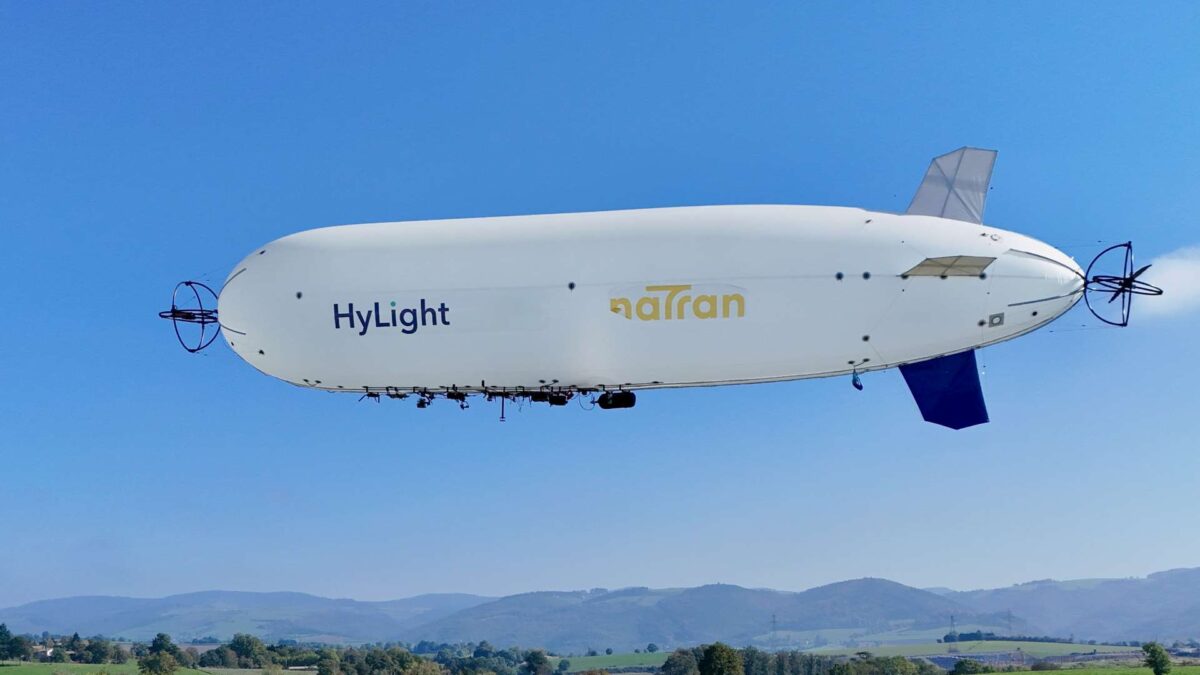
Hydrogen airships methane monitoring, Digimart Global (France): NaTran, the operator of France’s gas transport network, is testing hydrogen-powered airships developed by the French startup HyLight as a way to monitor methane emissions across its 32,600 kilometres of pipelines. According to the publisher’s report, the trial could pave the way for wider use of aerial surveillance by these airships.
NaTran flies over roughly a third of its network each year, about 10,000 kilometres, to comply with European environmental surveillance rules and quickly identify diffuse methane leaks. Until now, helicopters have been the preferred tool for this work.
A larger trial on the Nantes-Quimper route
HyLight and NaTran began joint trials in 2024 over about 40 kilometres. The effort has since expanded to a new phase covering roughly 500 kilometres of pipeline between Nantes and Quimper in autumn 2026, according to the report.
NaTran R&I director Pierre Blouet said the teams are supporting HyLight’s development of the airship and that the new phase should confirm the solution’s performance under real operating conditions at a large scale.
How the HyLighters work
HyLight, founded in 2022 at Brétigny-sur-Orge, makes airships about 12 metres long that fly at 20 to 30 metres altitude at 10 to 15 km/h. Their slow speed allows the laser methane sensor to work effectively, and the data collected is analysed to find areas needing intervention.
According to HyLight co-founder Thomas Laporte, hydrogen fuel cells let the airships fly for 8 to 9 hours, covering several hundred kilometres of infrastructure a day. He contrasted this with helicopters, which he said can inspect 200 to 250 kilometres per day, and drones, which have flight times of 30 to 45 minutes.
He also said the airships hold broader overflight permissions, including over urban areas.
Environmental and strategic goals
The trial will test whether the airship can detect methane in real conditions, follow pipeline routes over long distances and operate reliably in different weather. Laporte acknowledged limits such as wind and heavy rain.
If the trial succeeds, the company says the airships would have a carbon footprint below 3 g of CO₂ per kilometre, compared with just over 13 kg of CO₂ per kilometre for a helicopter flight. This would support NaTran’s strategic objective of reducing its carbon footprint by 40% by 2030.
NaTran R&I, which has 125 researchers, launched the Nova start-up incubator in 2022 to test innovations such as biomethane integration, hydrogen and CO₂ transport conversion, and artificial intelligence on its operating infrastructure.