superintelligence arrives Meta AI, Digimart Global: Mathematician Levent Alpöge announced that he had found a proof of the Riemann hypothesis, one of the most famous unsolved problems in mathematics, according to the publisher’s report. He works for Anthropic and said he used the Claude AI model to reach the result over six weeks.
The report states that two groups have since confirmed the validity of the result.
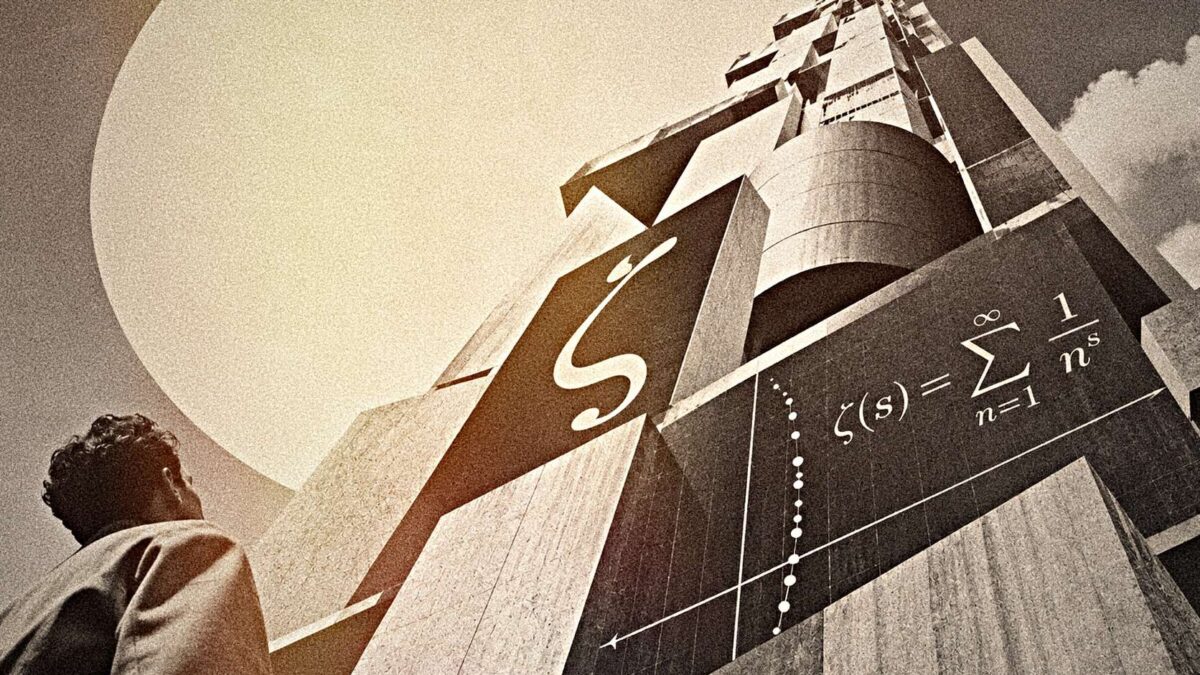
The Riemann hypothesis was formulated by Bernhard Riemann in 1859 and is one of the seven Millennium Prize Problems selected by the Clay Mathematics Institute in 2000. It holds that the non-trivial zeros of the zeta function have a real part equal to one-half. Because prime numbers underpin fields such as cryptography, the report notes the problem’s wide significance.
Alexandr Wang, director of AI at Meta, said the achievement shows that superintelligence is arriving. In his view, solving what he called the most intellectually demanding problem humanity has ever conceived marks an important threshold, suggesting that harder problems in other fields may also become solvable through specialised knowledge and experimentation rather than raw intelligence alone.
The report also describes concerns from researchers that AI development is moving faster than human understanding. As systems gain power and autonomy, their workings become harder to interpret, which could make it difficult to verify AI-generated discoveries and maintain control over the technology.
The publisher notes that scientific journals already face a surge in submissions, including many AI-generated texts of limited value.
The publisher also points to a possible downside: long-standing unsolved problems have driven mathematical innovation, and if AI supplies answers directly, parts of that research tradition could diminish. Wang has argued that safety of models alone is not enough and that society must avoid ceding control to them, though the report says he gave no concrete example of how Meta would guide its AI development.
The publisher cautions that claims about AI’s future remain hypothetical and that such rhetoric can emphasise model danger.