superintelligence arrives, Digimart Global: A mathematician named Levent Alpöge, who works for Anthropic, has announced that he found a proof of the Riemann hypothesis, one of the most famous and difficult problems in mathematics. He said he used the Claude artificial intelligence model to reach the result over six weeks.
According to the report, two groups have since confirmed the validity of the result.
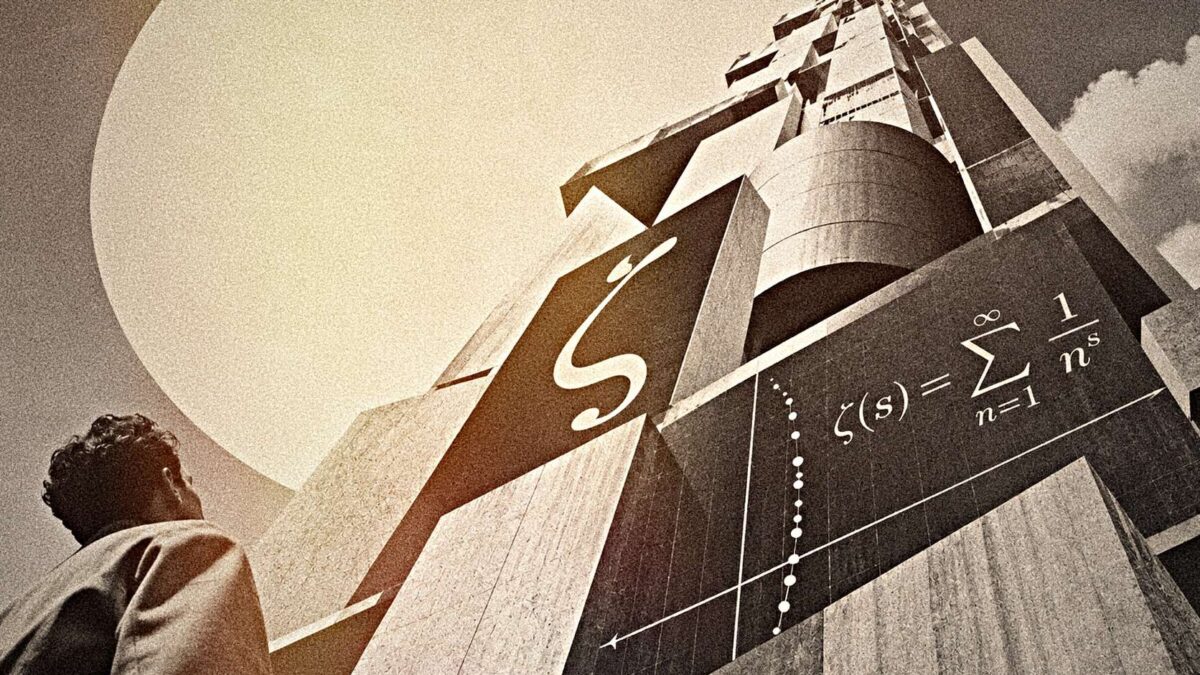
The Riemann hypothesis, posed by German mathematician Bernhard Riemann in 1859, is one of the seven Millennium Prize Problems selected by the Clay Mathematics Institute in 2000. It states that the non-trivial zeros of the zeta function have a real part equal to ½. Because of its role in number theory, which underpins parts of modern cryptography, the claim has drawn wide attention.
Alexandr Wang, who leads AI at Meta, said the achievement shows that superintelligence is arriving. Superintelligence refers to models that would surpass human intelligence.
Wang argued that solving what he described as the most intellectually demanding problem humanity has conceived signals a significant step in that direction, and that harder problems in other fields may now be a matter of specialised knowledge and experimentation rather than intelligence.
Researchers have also raised concerns. As AI systems grow more powerful and autonomous, their workings are becoming harder to understand, and the pace of discovery could outstrip humans’ ability to review and validate results.
Wang himself stressed the need to keep control of society rather than ceding it to models, though he did not give concrete examples of how Meta would steer its AI development. The report notes that claims about AI’s future are speculative, and that such statements from Silicon Valley figures can sometimes emphasise model risks in ways that serve commercial interests.