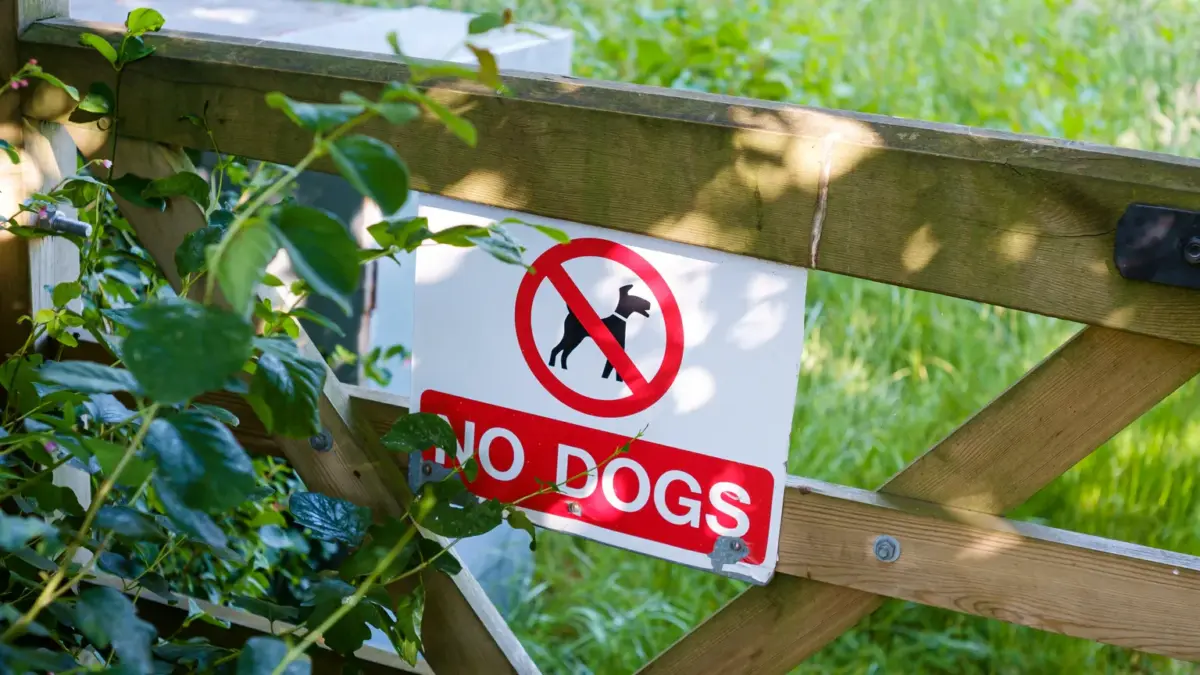
Dog owners warned, USA News (Devon, UK): A new law affecting owners of five dog breeds comes into force today. One dog trainer with two decades of experience has cautioned that simply nipping to the loo could mean breaking the law for some dog owners. From November 1, 2026, leaving a child under 12 in close contact with certain dogs in a private setting without adult supervision will become a criminal offence.
The legislation applies to owners of dogs appearing on the UK’s banned breeds list. While owning these dogs is forbidden, it remains possible to secure a certificate of exemption allowing people to keep them, with tens of thousands currently living throughout the UK. Selling, abandoning, giving away or breeding from a banned dog is also against the law. Additionally, whether your dog is considered a banned type is determined by its physical characteristics, not its breed or name. Consequently, if authorities decide your dog displays the features of a banned breed, it could be classified as a banned type.
Banned Dog Breeds in the UK
The banned dogs in the UK are the Pit Bull Terrier, Japanese Tosa, Dogo Argentino, Fila Brasileiro, and XL Bully. A substantial number of these dogs live throughout the UK. The XL Bully was prohibited in February 2024, while the other breeds were all listed in the Dangerous Dogs Act 1991. The XL Bully was linked to the deaths of 23 people in the two years before the ban, yet fatalities persisted even after it was implemented. By the close of 2024, over 57,000 had been registered with the Department for Environment, Food and Rural Affairs (Defra), although at that point they were being destroyed at a rate exceeding 100 per month.
Data from the UK Parliament website shows that in 2021, the Index of Exempted Dogs contained 3,655 Pit Bull Terriers, 20 Dogo Argentino dogs and three Japanese Tosa dogs. Owners holding a certificate of exemption allowing them to keep any of these banned breeds must adhere to strict conditions for the animal’s entire lifetime. The dogs must be neutered, fitted with a microchip, kept on a lead and muzzled at all times when in public, and kept in a secure place so it cannot escape.
Trainer Guidance and Legal Enforcement
Sharon Bolt, a dog trainer and founder of Good Dogs, explained the everyday impact of the regulations. Simply nipping to the loo could mean breaking the law for some dog owners. She noted that children under 12 cannot be left in close contact with exempted banned-breed dogs, including XL Bullies, without appropriate adult supervision in their home or garden. In everyday life, if an owner is at home with a young child and dog and needs to pop upstairs, take a shower, or use the restroom, they must separate them or bring them along.
If you are the owner of a banned dog, the UK Government confirms that police officers or local council dog wardens have the authority to seize and detain it, regardless of whether it is behaving safely or any complaints have been lodged. Should the dog be on private property, police must first secure a warrant before taking action. Following seizure, a specialist evaluates the breed and determines danger levels, after which the animal may be returned, kennelled, or euthanised. Owners must prove their dog is not prohibited to secure its return, otherwise facing unlimited fines, up to six months imprisonment, or both, alongside the destruction of the dog.