
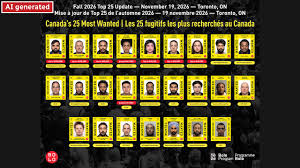
Canada most wanted AI images, Digimart Global (Canada): The Bolo Program, which stands for “be on the lookout,” presented Canada’s top 25 most wanted fugitives at a news conference in Toronto on Thursday using AI-generated images that blink, turn their heads and move as if seen in public. Executive director Max Langlois said the program brings the fugitives “into this room, life-sized, moving as they might if you saw them on the street.”
The program has partnered with police forces in some of Canada’s largest cities since 2018 and uses public awareness campaigns, new technologies and cash rewards to seek help locating major crime suspects. Langlois told CBC News by email that Bolo has used AI-generated images for a few years, based on available pictures and descriptions supplied by police, and said the images give the public a “better idea” of how suspects may look.
Concerns about accuracy and oversight
Some security and technology experts caution that the approach carries risks, including the accuracy of the digital avatars, privacy concerns and whether enough safeguards govern third-party programs working with police. David Eliot, a PhD candidate in criminology at the University of Ottawa who researches AI, said it is unclear what data was used to generate the avatars and how the wanted individuals’ mannerisms and body types were verified.
Langlois said the generation method is confidential.
Tamir Israel, director of the privacy, surveillance and technology program at the Canadian Civil Liberties Association, said composite images and sketches have historically contributed to wrongful convictions and arrests, particularly affecting Indigenous and Black people, and that AI-generated images raise similar concerns if they are based on low-quality source material.
Who is on the list
The list includes fugitives sought by police services in Montreal, Toronto, Winnipeg, Edmonton and Delta, B.C. At the top is Satinderjeet Singh, also known as Goldy Brar, wanted by Winnipeg police on a Canada-wide warrant for first-degree murder in relation to a 2023 killing.
Bolo is offering $250,000 for information leading to his arrest, and police describe him as a high-ranking member of the Lawrence Bishnoi gang.
Program results and open questions
Bolo’s annual report says 13 of the 25 most wanted suspects were arrested in 2025, the most of any year since the program began in 2018. The Toronto Police Service said 19 of 28 Toronto cases featured in Bolo campaigns have resulted in arrests. Israel said the program does not appear to track how many false leads or wrongful identifications result from its campaigns.
CBC News said it had asked Bolo that question and had not received a response at the time of publication.
Eliot said he does not see immediate red flags in the program but remains cautious, arguing that transparency and oversight are essential to maintaining public trust in police use of AI. He pointed to a 2021 finding by Canada’s privacy commissioner that the RCMP’s use of third-party facial recognition technology seriously violated privacy laws.