

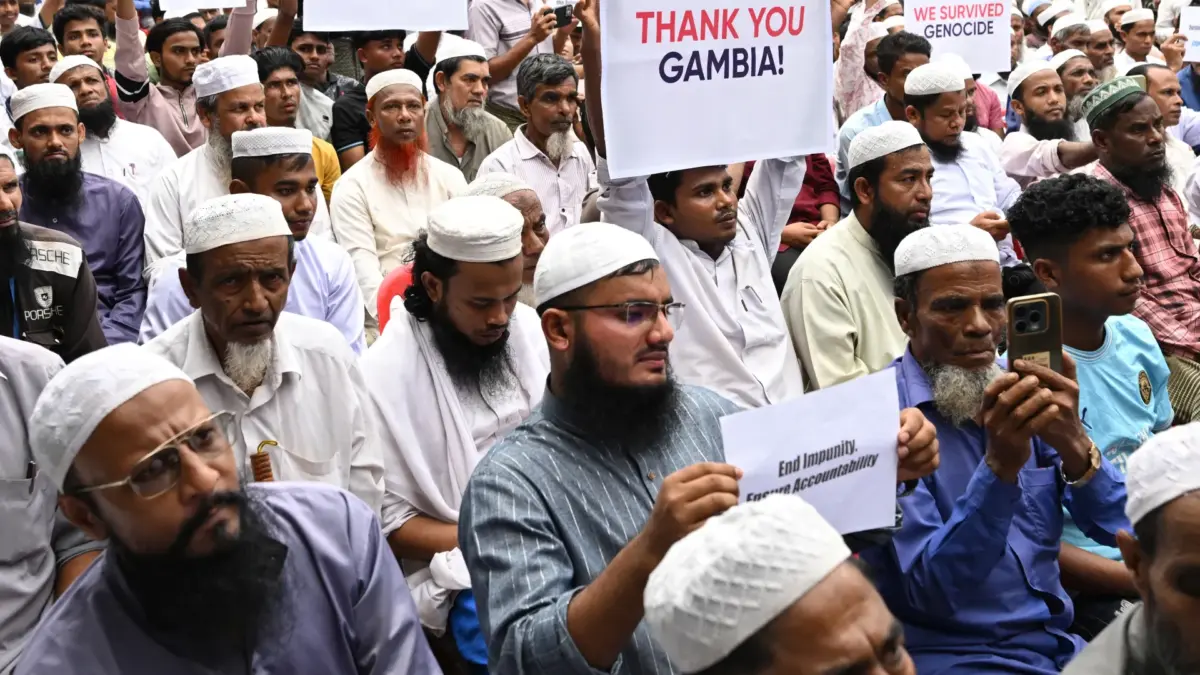
Rohingya genocide ruling, Digimart Global (Cox’s Bazar, Bangladesh): Rohingya refugees in the camps of Cox’s Bazar, Bangladesh, reacted with tears, prayers and renewed hope after the International Court of Justice (ICJ) found Myanmar responsible for genocide against the Rohingya during brutal military operations in 2017. According to the Al Jazeera report, the court found that more than 10,000 people had been killed.
The judgement was delivered in a case brought before the court by The Gambia. Refugees who had spent nearly a decade waiting for recognition of what they endured described the ruling as a landmark acknowledgement after years of denial.
Many followed the announcement on mobile phones, laptops and large screens, often with friends, family and community members.
Residents told Al Jazeera that the verdict was emotional rather than simply legal. Umme Ruman, who watched the news from her shelter in Camp 1E, said she celebrated with tears of joy because the world had finally acknowledged what happened to the community.
Eighteen-year-old Mohammad Rehan said the first thought for many was that the ruling could open the door for the Rohingya to return home.
The celebrations took place against difficult living conditions. Rain fell over the camps on the same day as Cyclone Akvan moved towards the Bay of Bengal, adding to the strain on families in crowded shelters.
Some refugees said the announcement also brought back painful memories of the violence and displacement of 2017.
According to the report, The Gambia was not directly affected by the violence but acted as a party to the 1948 Genocide Convention, under which member states have an obligation to prevent and address genocide. The court had ruled in 2022 that The Gambia had standing to bring the case.
Analysts quoted in the report said the judgement carries wider significance. Nasir Uddin, a professor of anthropology at the University of Chittagong, said it was essential for justice and accountability from the victims’ perspective.
Michael Kugelman of the Atlantic Council said the ruling could affect negotiations between Bangladesh and Myanmar on repatriation, with Dhaka likely to need stronger assurances about the safe return of Rohingya refugees.
For the Rohingya, the central demands remain accountability for those responsible, restoration of their rights and citizenship, and a safe and dignified return to Myanmar. Refugees interviewed in the report said they hope the verdict will lead to lasting change, including an end to discrimination and military rule in Myanmar.