
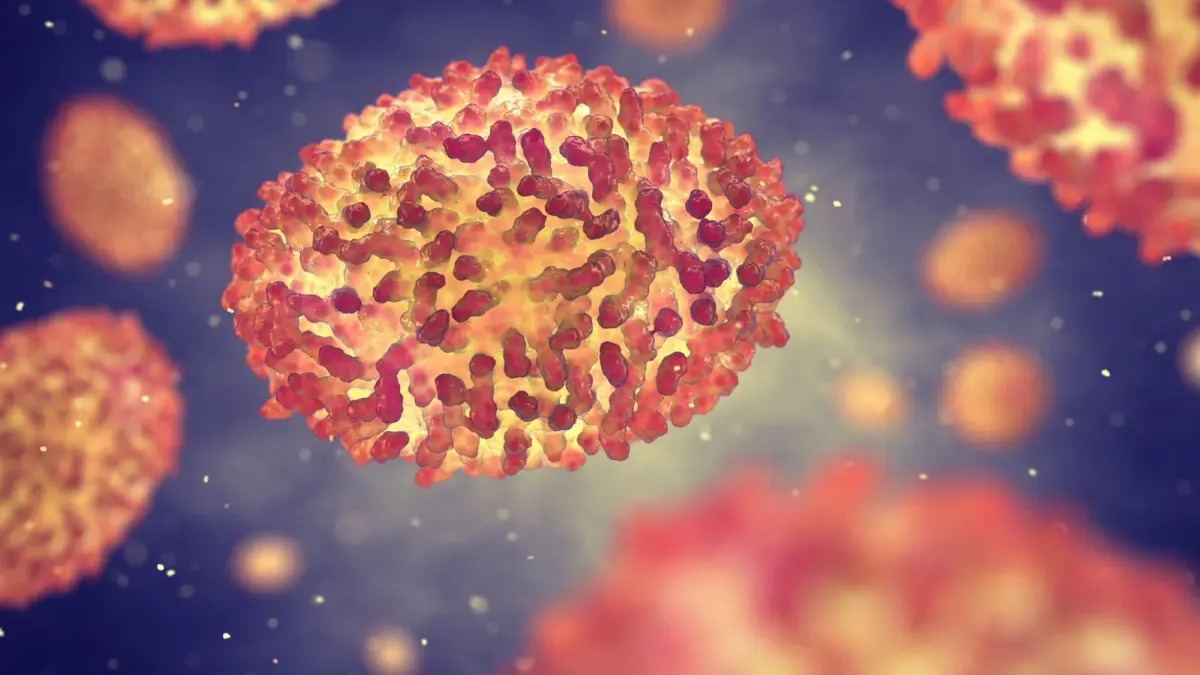
Egoviruses gut viruses and the origins of smallpox, Digimart Global: A previously overlooked group of large DNA viruses, named egoviruses, may be the closest known evolutionary relatives of poxviruses, the family that includes the smallpox virus. The findings were reported in the journal Nature by an international team of scientists from Université Paris-Saclay, the French National Centre for Scientific Research (CNRS), ETH Zürich, several German marine research institutes, the US National Institutes of Health and Institut Pasteur, according to the News-Medical report.
Based on metagenomic detection rates and population statistics, the researchers estimate these viruses could inhabit the digestive systems of approximately 180 million people worldwide. They are found mainly in the gut microbiomes of people, livestock and wildlife.
Metagenomics allows scientists to study genetic material recovered directly from samples without cultivating individual organisms or viruses.
The team analysed more than 85,000 metagenomic assemblies and identified a distinct viral lineage with evolutionary links to asfuviruses and poxviruses. Together, these approaches helped recover 12 complete egovirus genomes and more than 200 additional metagenome-assembled genomes.
The researchers proposed Egovirales as a third taxonomic order within the Pokkesviricetes group.
Egovirus genetic markers were detected in 2.3% of surveyed human gut samples, with higher prevalence in animals, including 11% of pig samples, 14% of goat samples and 26% of buffalo samples. Among Hadza hunter-gatherers in Tanzania, 6.2% of samples contained egovirus markers, and three human-specific clades occurred almost exclusively in that population, suggesting lifestyle may influence gut viral diversity.
The researchers suggest the common ancestor of egoviruses and poxviruses may have infected anaerobic single-celled eukaryotes in the digestive tracts of early animals, before the lineages leading to insects and vertebrates diverged roughly 700 million years ago. The lineage leading to modern poxviruses may later have acquired the ability to infect animal intestinal cells, a shift that may have coincided with changes in viral particle shape.
The study does not show that egoviruses infect humans or affect human or animal health, and the proposed capsid architecture has not been directly observed. The authors note that egovirus diversity, particularly among wild animals, remains poorly understood because of limited sampling, and further research could clarify their host range, health implications and evolutionary history.