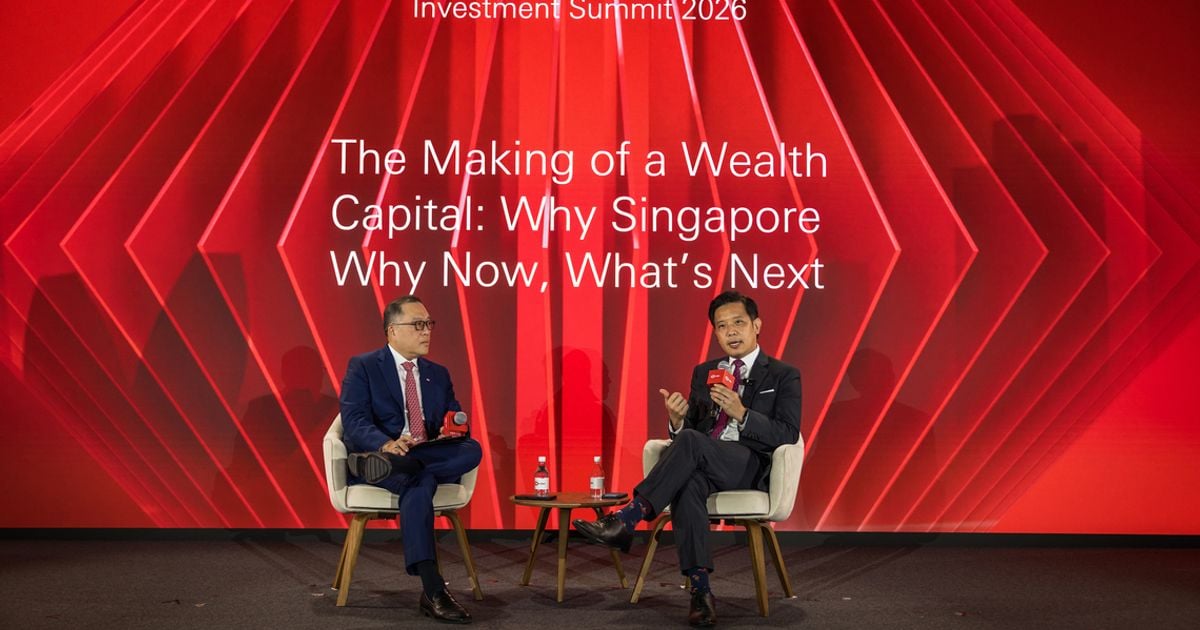
Singapore wealth management AI and assets under management, Digi Mart USA News (Singapore): Minister of State for Foreign Affairs and National Development Alvin Tan said Singapore must harness artificial intelligence to generate new wealth and strengthen its position as a global financial centre, while maintaining strong safeguards to protect the integrity of its financial system. He spoke at the inaugural HSBC Singapore Wealth Investment Summit 2026 on November 17.
Tan said the country is not seeking to compete with global technology giants in developing cutting-edge AI models. Instead, Singapore aims to position itself as a centre for the research, development and application of AI across industries, including financial services.
He also said the wealth management industry had grown on the back of trust, with assets under management reaching $7 trillion and private banking client assets rising by about 50 per cent over the past five years.
Tan noted that Singapore now has about 2,000 single-family offices, reflecting the continued flow of wealth into the country. He said the financial sector contributes about 14 per cent of Singapore’s gross domestic product and employs about 200,000 people.
Tan is a Monetary Authority of Singapore (MAS) board member.
Tan outlined three priorities for Singapore’s development as a wealth centre: growing wealth through trust, generating wealth through innovation, and giving wealth through philanthropy and legacy planning. He said trust and innovation go hand in hand, and that Singapore must remain a trusted regulatory hub while keeping its financial sector competitive and responsive to global investors’ needs.
He highlighted five areas where Singapore can apply AI to create economic opportunities: connectivity, advanced manufacturing, healthcare, national development housing projects and financial services. In financial services, he said AI could reduce the time needed to gather information and prepare investment recommendations.
He cited the example of annual portfolio reviews, which previously required bankers to collect data from investment banking, trading and wealth management divisions, a process that could take several hours. With AI, he said, such a presentation could be prepared in minutes, allowing bankers to spend more time engaging clients.
Tan said about 30 financial institutions, including HSBC, have established centres of excellence in Singapore to develop AI capabilities and financial applications, including tokenised money market funds, agentic commerce and AI-powered advisory services. He also cited Google’s DeepMind AI research lab and OpenAI’s recently announced US$200 million (S$258 million) investment in AI research in Singapore as examples of the growing ecosystem.
Tan said the expanding use of AI in finance must be accompanied by appropriate safeguards, particularly as agentic AI takes on more responsibilities in financial transactions and advisory services. He said HSBC has been working with MAS on safeguards for agentic finance, including measures to ensure AI systems operate safely at runtime.
Beyond AI, Tan pointed to initiatives to strengthen the equities market, establish Singapore as a gold trading hub and develop a growth capital market group to help start-ups raise funds and find exit opportunities in public and private markets. On regulation, he said Singapore must balance rigorous anti-money laundering and counter-terrorism financing safeguards with the efficient entry of legitimate wealth into the financial system.
He said the Government has been working with the private banking industry and MAS to improve account-opening processes while maintaining checks on source of wealth and source of funds.
Tan also highlighted philanthropy, citing early philanthropists who built schools, hospitals and businesses. He pointed to the Impact Philanthropy Partnership and the Philanthropy Tax Incentive Scheme as initiatives meant to encourage wealthy families to give back in Singapore and the region.
He said Singapore’s ambition is not simply to attract wealth but to use it to generate good jobs, support innovation and contribute to the wider region, while planning for long-term constraints involving land, water and energy.
In a closing keynote on AI governance, Ravi Menon, chairman of the Global Finance and Technology Network and a former managing director of MAS, warned that financial institutions must strengthen governance and retain human oversight as AI agents gain the ability to make investment decisions and move money autonomously. He outlined five safeguards: alignment, limits, prudence, humility and accountability, and argued that responsibility for AI-driven decisions must remain with humans.