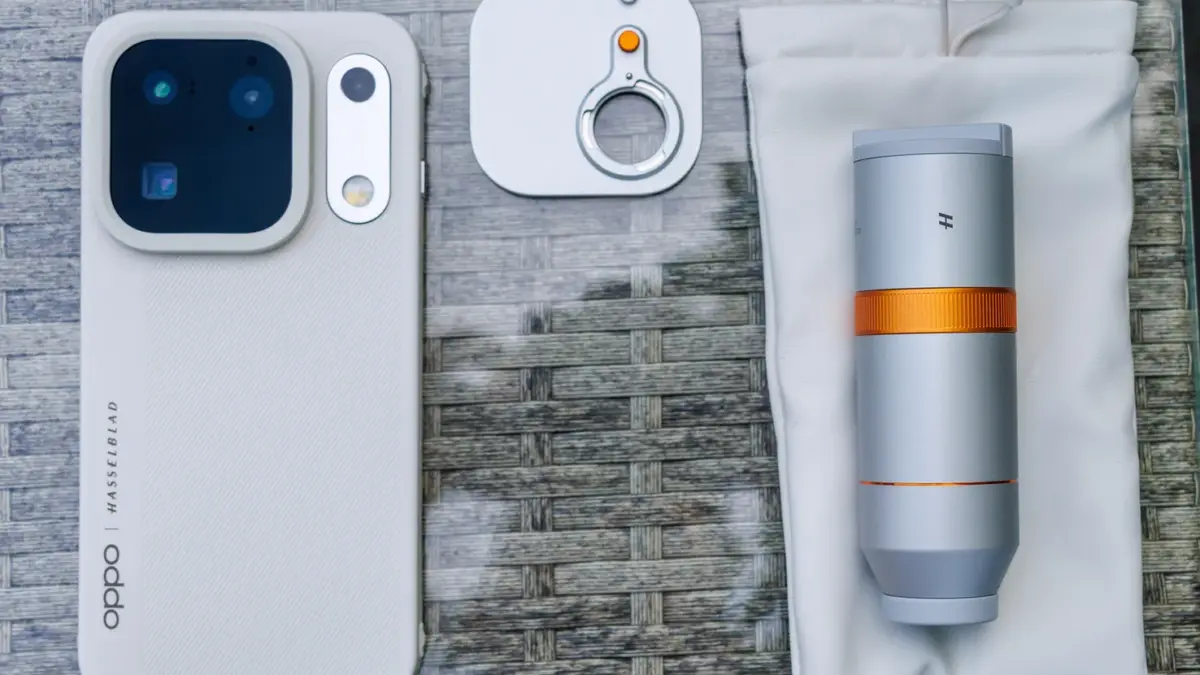
Oppo Find X10 Pro Max speaker distortion, Digi Mart USA News: Oppo launched the Find X10 and Find X10 Pro Max in Europe last month after their September debut in China. According to the publisher, the Pro Max is priced from €1,799 and features three 200 MP rear cameras, MediaTek’s Dimensity 9600 Pro processor and symmetrical stereo speakers.
The speaker setup drew scrutiny after a Reddit user reported a buzzing noise that became noticeable during Zoom calls. The user bought two white 16 GB/1 TB phones from official Oppo dealers and said both units buzzed.
The noise could be reproduced by playing a tone around 800 Hz with the tone generator and phone volume set to maximum.
According to the publisher’s account, replacement phones did not solve the problem, as all three sealed units Oppo supplied in two batches showed the same issue. The user also heard buzzing on two shop display units, meaning all seven Chinese-market phones checked showed the problem.
The user declined the replacements and returned the original two phones.
Notebookcheck then tested its own European Find X10 Pro Max using an Earthworks M23R measurement microphone, a Focusrite Scarlett audio interface and ARTA software, recording speaker output at 80% volume. At 800 Hz, the left speaker produced audible buzzing and rattling, even when the phone was held freely in the hand.
Spectrum analysis showed harmonic distortion, including a fifth harmonic at 4,000 Hz about 22 dB below the original tone. At 700 Hz the extra tones were considerably weaker, indicating less distortion than at 800 Hz.
At the same volume setting the right speaker did not produce the audible buzzing or rattling heard on the left. Its spectrum still showed stronger harmonics at 800 Hz than at 700 Hz, though the additional tones were less pronounced, including a much weaker fifth harmonic at 4,000 Hz.
Oppo advertises symmetrical stereo speakers meant to deliver more evenly balanced sound from the top and bottom of the phone. A WekiHome teardown shows an AAC Technologies 1510X unit at each end, both containing N’Bass acoustic material intended to improve bass.
Notebookcheck’s European unit nonetheless produced audible rattling at 800 Hz, with strong harmonic distortion during the same test.
Notebookcheck lists possible causes including mechanical resonance within the speaker module or housing, diaphragm distortion at high volume, poorly tuned digital signal processing and manufacturing variation. In a follow-up post, the Reddit user said Oppo engineers suspected a waterproofing membrane was hitting the speaker diaphragm at high volumes.
Notebookcheck says its recordings cannot confirm that explanation, and that its test was not fully controlled, so further comparisons with additional devices would be needed to judge how widespread the problem is. Notebookcheck says it has reached out to Oppo for comment.