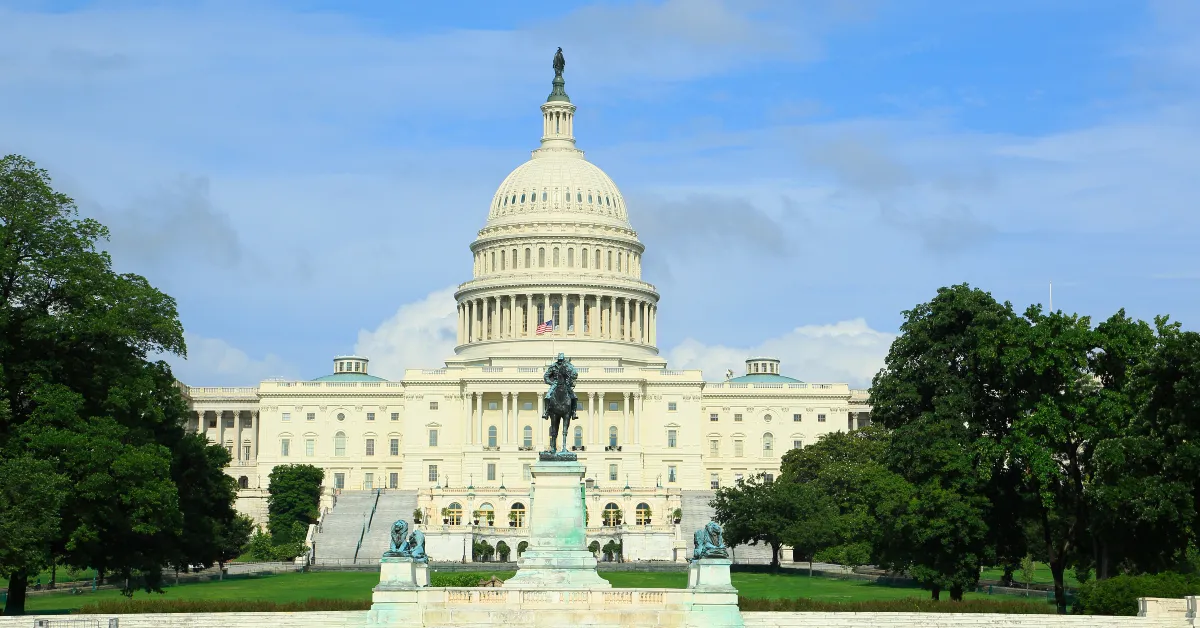
Democratic Social Security proposals in Congress, Digi Mart USA News (United States): Control of Congress can shift after an election, but a new majority does not automatically change Social Security law. Any proposal must still pass committee votes, floor votes in both chambers and a presidential signature.
Several specific bills from Democratic lawmakers, and some bipartisan measures, have been introduced, but many have not advanced past introduction.
Representative John Larson, a Democrat from Connecticut, most recently reintroduced the Social Security 2100 Act (H.R. 9519) on June 29, 2026, with a companion Senate bill (S. 5042) from Senator Richard Blumenthal on July 21. The publisher reports the bill would raise benefits by about 2% from 2027 through 2036, base the annual cost-of-living adjustment on the higher of the current inflation index or one tracking spending by Americans 62 and older, and raise the minimum benefit for long-term low earners.
To fund these changes, the bill would remove the current $184,500 payroll tax cap so Social Security taxes apply to all wages, and add a 12.4% tax on investment income for individuals earning over $400,000. Larson lost his Democratic primary on August 11, 2026, so the bill will need a new lead House sponsor when his term ends in January 2027.
Senator Bernie Sanders, an independent who caucuses with Democrats, most recently introduced the Social Security Expansion Act as S. 770 on February 27, 2025, alongside Senator Elizabeth Warren and Representatives Jan Schakowsky and Val Hoyle. This family of proposals generally applies payroll taxes to earnings above a high-income threshold while leaving a gap in the middle.
The Social Security Administration’s Office of the Chief Actuary has separately modeled a 12.4% payroll tax rate on earnings above $250,000. The current payroll tax is 6.2% each for employees and employers, and the 2026 taxable maximum is $184,500.
Senator Mazie Hirono, a Democrat from Hawaii, introduced the Protecting and Preserving Social Security Act (S. 2614) on July 31, 2025, with Representative Jill Tokuda introducing a House companion (H.R. 4968) on August 12, 2025. The bill would base the annual cost-of-living adjustment on the Consumer Price Index for the Elderly (CPI-E) and ensure resulting increases do not disqualify recipients from Medicaid or Supplemental Security Income (SSI).
It would phase out the payroll tax cap over seven years. According to the Social Security Administration’s Office of the Chief Actuary, the bill would extend trust fund solvency by 11 years, moving projected depletion from 2034 to 2045 under 2025 Trustees Report assumptions.
The We Can’t Wait Act of 2026, introduced by Senators Susan Collins, a Republican, and Maggie Hassan, a Democrat, on February 25, 2026, targets Social Security Disability Insurance rather than retirement benefits. It would let newly approved disability claimants skip the current five-month waiting period in exchange for a modest reduction in their monthly payment.
The publisher notes this bipartisan bill shows that Social Security proposals do not always split strictly along party lines.
Former Speaker Nancy Pelosi asked the Social Security actuaries to price a proposal to reduce elderly poverty by expanding SSI, which pays up to $994 a month in 2026 ($1,491 for an eligible couple), rising to $1,029 and $1,544 in January 2027. The Social Security Administration estimates the changes would add $316 billion in federal SSI payments through 2034, with no direct effect on the trust funds.
The publisher reports that no bill has been filed yet.
Regardless of party, these proposals do not change current benefits. Bills do not carry over between Congresses, so new legislation typically must be reintroduced.
A bill would also need committee approval, House and Senate floor votes, often 60 Senate votes to overcome procedural hurdles, and a presidential signature or veto override. Under current law, the average retired-worker benefit was around $2,071 a month in January 2026 after a 2.8% cost-of-living adjustment, and the Social Security Administration has announced a 3.6% adjustment for 2027.