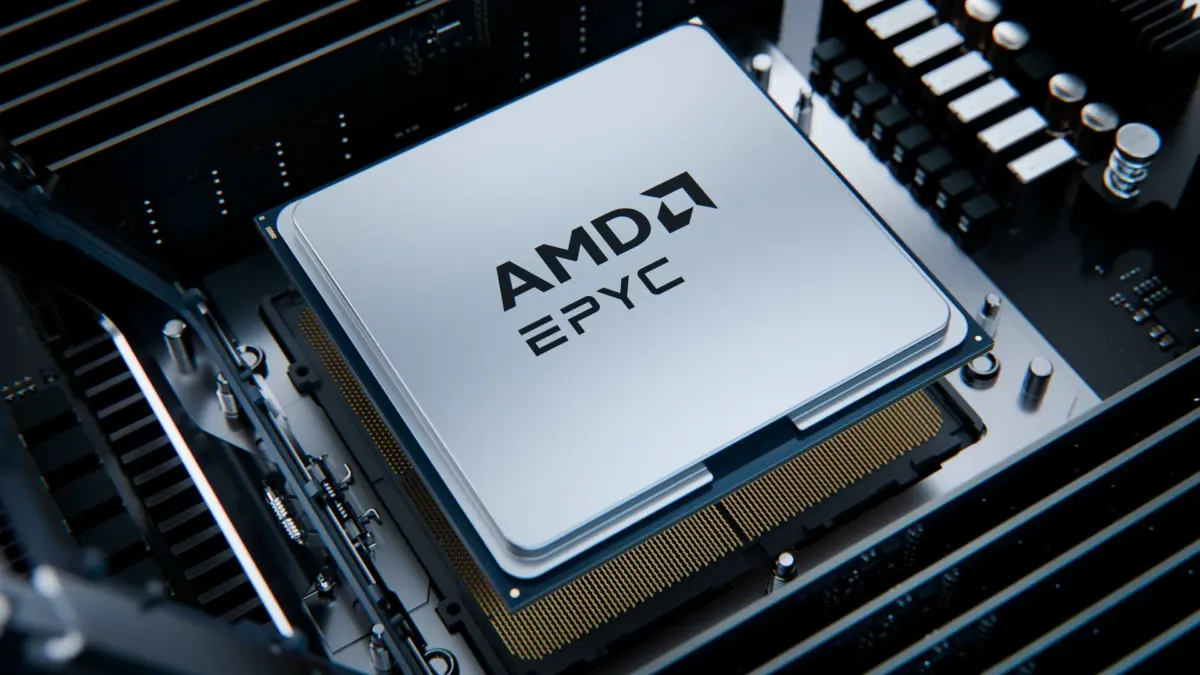
AMD Mext server memory technology, Digi Mart USA News: AMD has developed a way to reduce server memory costs. Its Mext technology moves less frequently used data from DRAM to much cheaper SSD storage, while machine-learning algorithms predict which data applications are likely to need next in order to limit the performance impact.
According to the publisher’s report, the technology is already running on 145 systems, with customers estimated to have saved around $5 million in memory costs. AMD acquired Mext in June and is now preparing to bring it to enterprise customers running Epyc processors.
Gary Smerdon, Mext’s former CEO and now AMD’s corporate vice president of business development, said memory can account for 60% to 90% of the cost of large servers. Replacing some of that DRAM with SSD storage could therefore save customers considerable money.
The approach resembles swap files or the Windows page file, which move data from RAM to storage when memory runs low, but flash storage can be up to 500 times slower than DRAM, which usually causes a performance penalty.
Mext tries to reduce that slowdown by using machine learning to predict which memory pages applications will need and return them to RAM before they are requested. Smerdon cited Meta research showing that 50% to 80% of memory pages had not been accessed for at least five minutes, suggesting that a large share of expensive DRAM may not be actively used.
The software uses several machine-learning algorithms, including a model derived from transformer technology, and AMD says initial training takes less than a second on a single Epyc CPU core without requiring a GPU.
AMD’s tests show results depend heavily on the workload and the share of DRAM replaced with flash. In tests with Synopsys PrimeTime, an electronic design automation tool, Mext replaced half of the system’s DRAM while retaining 95% of its original performance.
When DRAM made up just 25% of memory and flash accounted for the remaining 75%, performance fell to 80% of the original level. With Apache Spark, AMD reports that Mext retained 99% of performance after half the DRAM was replaced with flash.
The technology has limitations. In virtualised environments, the software requires one CPU core per virtual machine or virtual private cloud instance, which could create significant overhead on servers running many virtual machines.
AMD plans to license Mext through its OEM partners, and it will work exclusively with AMD hardware. The company is working with manufacturers such as HPE to prepare compatible Epyc systems and is developing a separate RAM View application to help customers identify which servers and workloads could benefit.
Pricing and a launch date for wider availability have not been disclosed.