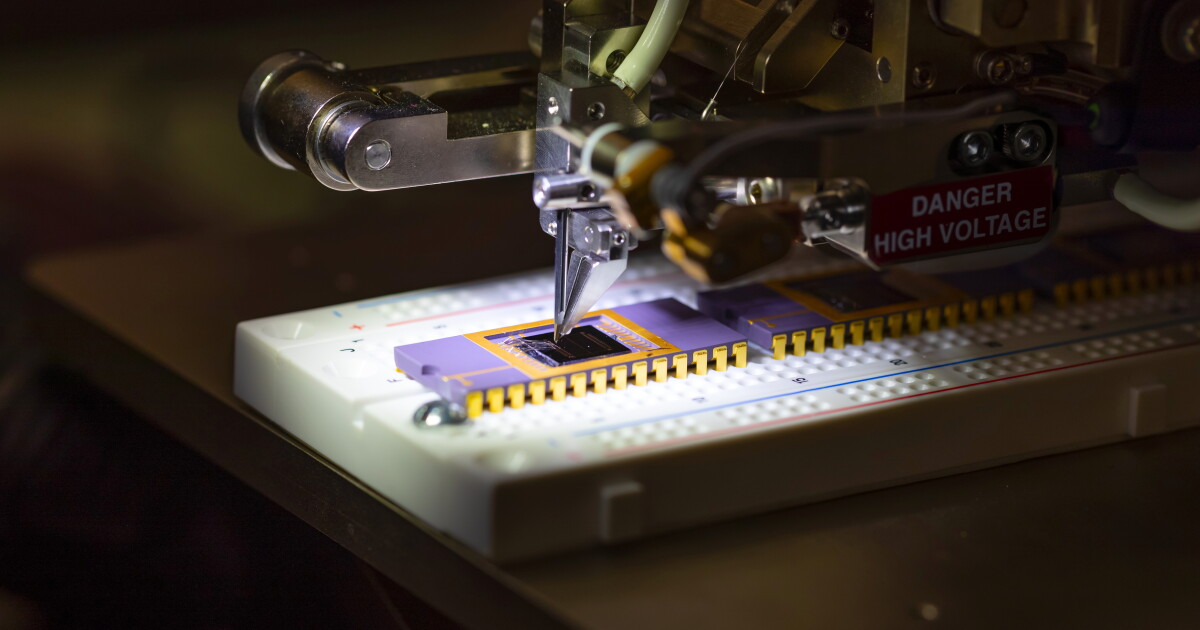
Battery-free graphene energy harvester, Digi Mart USA News: Researchers at the University of Arkansas and the University of Michigan have developed a graphene-based energy harvester that generates electricity from ambient radiation emitted by nearby electrical wiring, according to a publisher report on New Atlas. The team demonstrated the technology with a battery-free temperature-sensing system.
The system works through electromagnetic induction. Alternating current flowing through a wire creates a magnetic field that continually changes direction and strength; in the United States, where the system was developed, this occurs at 60 Hz.
The researchers built an inductor from graphene and added a steel core to improve how it captures this field. When placed near a power cable, the fluctuating field induces a small alternating voltage, the same basic principle behind conventional transformers and generators.
That raw signal is too weak and is alternating rather than direct current, so the team built a circuit based on a Cockcroft-Walton voltage multiplier to convert it to DC and raise its voltage. Instead of a rechargeable battery, the harvested energy is stored in three capacitors.
According to the researchers, the harvester replenishes the stored energy faster than the sensor consumes it.
Because the harvested power remains very low, the researchers designed a custom ultra-low-power temperature sensor that operates at the nanowatt scale. According to the researchers, stored charge could keep the sensor running for at least 24 hours, and possibly up to a week, if the nearby power supply is interrupted.
Prof. Paul Thibado, the harvester’s inventor, described the design as allowing the sensor to keep drawing charge even during an outage.
The researchers note important limitations. The harvester needs sufficiently strong changing magnetic fields near electrical wiring and cannot generate power anywhere.
The team has not shown the system can start from a completely discharged state, as the capacitors were pre-charged and the processor programmed before operation. The nanowatt output is also suited mainly to a dedicated sensor rather than larger devices.
The researchers envision applications in low-power sensing for product tracking, atmospheric monitoring, fleet management, soil and wearable fitness monitoring, and medical tracking, and are also exploring acoustic, solar, thermal, kinetic and other ambient energy sources. A paper on the study was published in the Journal of Vacuum Science and Technology.