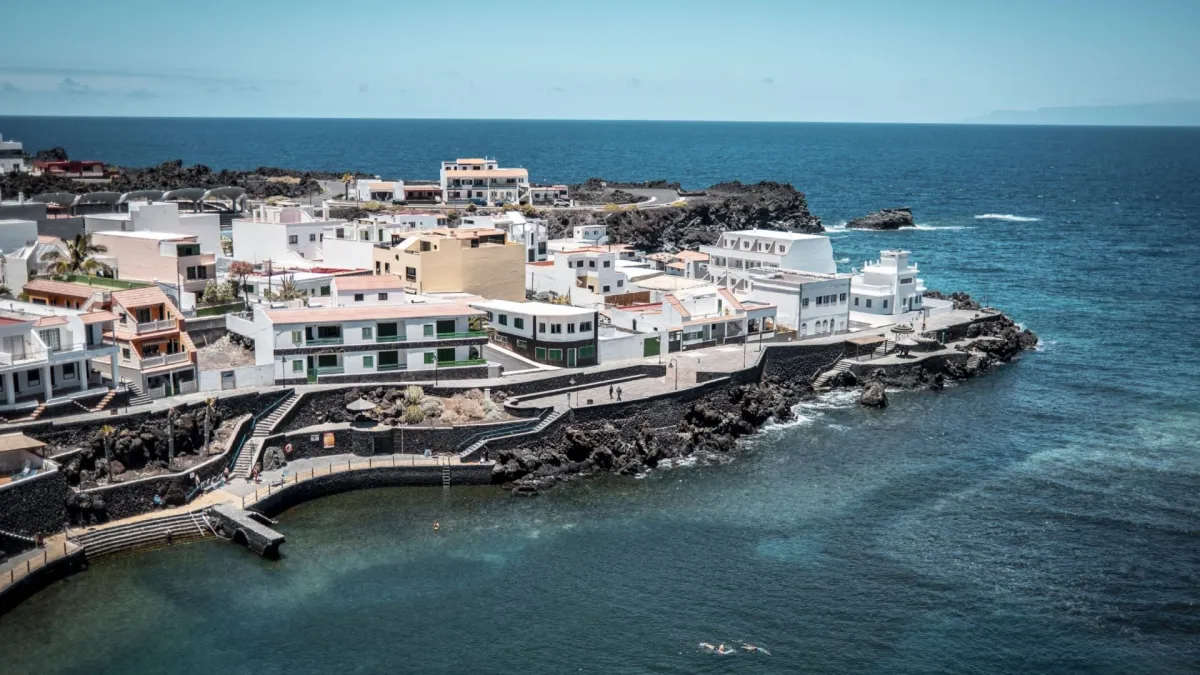
Canary Islands migrant arrivals surge ahead of winter tourist season, Digi Mart USA News (Canary Islands, Spain): Authorities in the Canary Islands have declared an emergency following a surge of thousands of migrant arrivals since the start of the month, as the popular holiday destination prepares for an influx of British tourists seeking winter sun.
More than 8,000 migrants have arrived on El Hierro, the second smallest of the eight islands in the Spanish archipelago, over the past five weeks. Authorities said 6,665 migrants had arrived in the Canaries on small boats since the start of November, a rise of 1,355 per cent compared with the same period last year.
Spain’s prime minister, Pedro Sánchez, held an emergency meeting on Tuesday over the growing pressure facing the Canary Islands, where UK holidaymakers form the largest contingent of foreign visitors. Thirty-five people were reported dead after a boat capsized last Friday off the coast of Senegal, one of the principal feeder countries of migrants to the archipelago.
The crisis comes at the start of the November to March high season for the tourist trade in the Canaries, situated 100 kilometres (60 miles) off the coast of Western Africa. It follows a surge of arrivals in Spain’s North African enclave of Ceuta in August, when more than 72,000 migrants crossed the border from Morocco in a deadly mass border rush.
Fernando Clavijo, the Canary Islands’ regional leader, said on Sunday that he had called the prime minister to alert him over the severity of the situation on El Hierro and the mounting discontent among residents. El Hierro has a population of just 11,500 and attracts British and German trekkers who enjoy its rugged terrain.
A resident who did not want to be named said that migrants had recently at times outnumbered locals. Of the 66 small boats that have arrived in the Canaries since the start of the month, 48 have landed on El Hierro.
Last year, 15.69 million tourists visited the Canaries, of whom 6.09 million were British, according to the Spanish Statistics Institute. Lanzarote is the most popular of the eight islands for UK travellers, followed by Gran Canaria.
Holidaymakers are not always oblivious to the islands’ migrant crisis. Rebecca Wilson, 37, from London, said she had seen boat arrivals since she started visiting Gran Canaria a decade ago.
“A boat landed on the beach one day when we were there. The military police arrived with a lorry, picked them up and took them away,” she told The i Paper.
On another holiday a couple of years later, she saw migrants “getting loaded on a plane.” Wilson said there were far more migrants working on the island since she began holidaying there, including those selling products on beaches. “I have to say, they are always polite,” she added.
She said she had heard from a local that more migrants were getting residency, and that they were landing jobs because they worked harder than Spaniards.
José Gómez, 41, who lives in Gran Canaria but regularly visits El Hierro, said: “The island has lots of British trekkers and people cycling and diving. The arrival of so many migrants has meant that they have had to close the port of La Restinga, which is a fishing port which also has people doing diving and other water sports.”
Spanish government sources told El Confidencial, an online newspaper, that as many as 35,000 migrants could reach the Canary Islands this year, roughly double the 17,500 who made it there in 2025. The latest rise in arrivals is partly explained by good weather, according to Juan Carlos Lorenzo of the Spanish Commission for Refugee Aid (CEAR) in the Canary Islands.
This has prompted migrants fleeing political unrest in the West African state to risk the perilous journey of up to 12 days in flimsy boats.
Police cooperation between Spain and Senegal has failed to cope with the large number of departures. Spain has 36 police and four patrol boats stationed in Senegal.
The number of migrant arrivals in the Canary Islands fell by 62 per cent in 2025, from 47,000 in 2024, after deals between the European Union and Mauritania, Senegal and Morocco, the three main countries of origin for migrants arriving by boat.
Arrivals are now climbing again, and Clavijo said the Canary Islands have been calling for months for additional resources, better planning and a coordinated governmental response. He said he had requested “urgent meetings” with European Commission President Ursula von der Leyen and European Commissioner for Internal Affairs and Migration Magnus Brunner.
“The Canary Islands cannot continue to face, practically on their own, a situation that requires the involvement of the Spanish government and Europe,” Clavijo added.
Matthew Saltmarsh, spokesman for the United Nations refugee agency (UNHCR), told reporters in Geneva on Tuesday that 6,200 people arrived in the Canary Islands aboard 65 boats in October, the highest number of monthly arrivals since 2024, representing a 417 per cent year-on-year rise. “This route is one of the most dangerous routes in the world and people are coming from countries affected by conflict, violence and instability, and that includes Mali, Burkina Faso, Sudan and Somalia, as well as a number of countries in the region,” he added, noting that arrivals include women and a significant number of unaccompanied children and adolescents.
Lorenzo said this year’s surge in arrivals from Senegal looked unlikely to end any time soon. “There is a younger generation there who cannot see any hope in their own country,” he told The i Paper, “so they leave for the Canary Islands.”