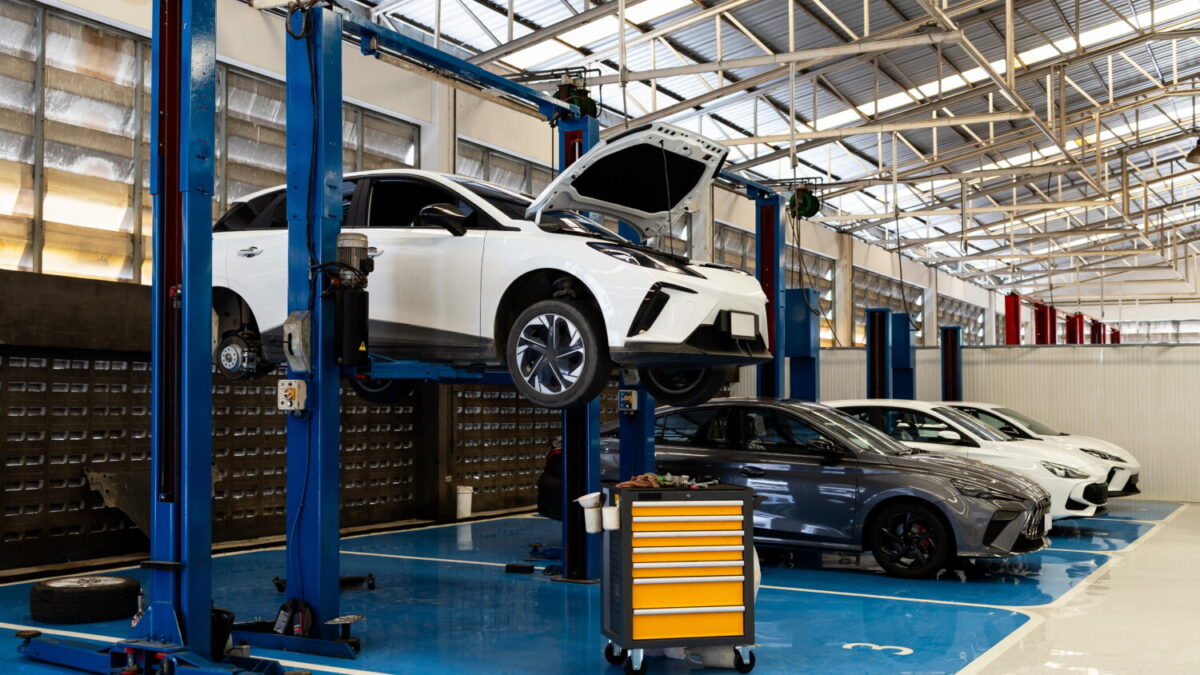
electric vehicle maintenance costs and impact on independent garages, Digi Mart USA News: Electric cars are reshaping the car repair market in ways that are less discussed than purchase price, range or charging. Their impact on garage workshops and driver budgets is a significant side effect of connected vehicles.
An electric motor has very few moving parts compared with a diesel or petrol engine. There are no pistons, valves, turbochargers or complex injection systems, so oil changes, spark plugs, air and fuel filters and timing belts disappear.
According to the French automotive publication AutoBild, maintenance costs for an electric model can be up to 30% lower than for a comparable combustion model, while several French studies place the savings between 20% and 40%.
Some services disappear, while others remain or change. Brakes still exist but wear much less thanks to regenerative braking.
Tyres, however, wear faster because of the vehicle’s greater weight and instant torque. Service intervals are also longer, often every two years or 30,000 km, compared with roughly yearly or every 20,000 km for combustion cars.
For drivers, the lower number of garage visits and fewer costly operations make a clear financial difference. Over several years, maintenance of an electric vehicle costs noticeably less than a petrol or diesel car of similar size.
Some French cost-of-use analyses estimate that, when purchase, charging, maintenance, insurance and parking are combined, running an electric car can cost tens of euros per month less depending on driving habits.
Not everything disappears, however. Tyres of battery-electric models wear out faster because they carry a weight that can be close to 30% higher and instant torque at every start.
Brake pads and discs often last about twice as long as on combustion cars thanks to regenerative braking. The battery also degrades over time and charge cycles, much like a smartphone battery.
Manufacturers generally guarantee around 8 years or 160,000 km, with a threshold of roughly 70% to 80% remaining capacity.
For garages, the shift creates financial pressure. For decades, workshops relied on traditional mechanical work such as oil changes, clutches, timing belts, exhaust systems, filters and clogged injectors.
Many of these revenue lines shrink or disappear with fully electric vehicles. Repairing high-voltage systems, managing traction batteries or power inverters requires specialized training and costly equipment.
According to work by the Association Nationale pour la Formation Automobile, electric vehicles currently generate little maintenance and repair activity apart from tyres, and their growing share of the fleet could reduce after-sales labour needs. This could be a serious challenge for small independent garages, especially in rural areas, that may lack the resources to invest heavily.
The transition is not yet fully visible on the ground. The French fleet remains overwhelmingly combustion-powered and is ageing, with many cars more than 10, sometimes 15 or 20, years old.
Older vehicles still need conventional and often heavy maintenance such as clutches, shock absorbers, exhaust corrosion and leaks, keeping traditional workshop schedules full. Garages must therefore continue to rely on this ageing combustion fleet while preparing for electric vehicle customers, with some investing in high-voltage training and advanced electronic diagnostics and others risking losing ground to dealership networks and approved repairers.