Mexico legal certainty and arbitration to attract investment, Digi Mart USA News (Mexico City, Mexico): Mexico’s ability to attract and retain investment will increasingly depend on the confidence its institutions inspire, the predictability of its legal decisions and the availability of effective mechanisms for resolving commercial disputes. These factors have strategic importance for national competitiveness.
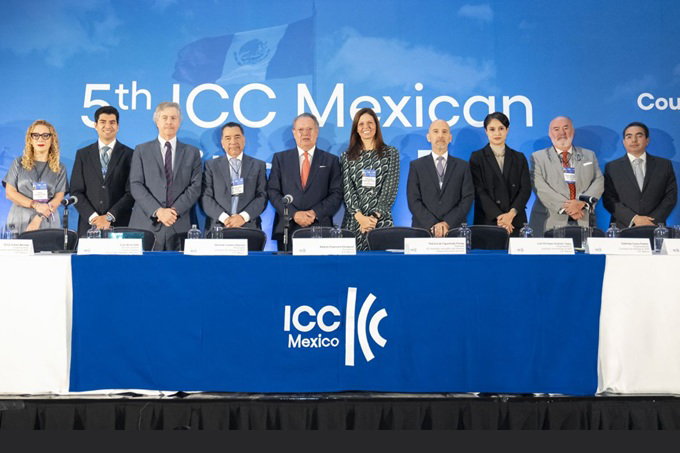
These were among the main themes of the 5th ICC Mexican Arbitration Day, organized by the International Chamber of Commerce Mexico (ICC Mexico) in the capital. The event brought together arbitrators, lawyers, business leaders and specialists from Europe, the United States and Latin America to analyze the challenges facing international dispute resolution.
During the opening session, Alberto Espinosa Desigaud, president of ICC Mexico, warned that the fragmentation of world trade, the relocation of investments and the advance of artificial intelligence are changing the conditions in which companies and investors operate. He said Mexico faces legal certainty challenges stemming from the judicial reform that took effect in 2025, whose effects on perceived risk could influence investor confidence and capital flows.
Against this backdrop, he stressed the importance of strengthening arbitration and alternative dispute resolution mechanisms as tools to protect investments, reduce uncertainty and contribute to a more reliable business environment.
Mexico’s international relevance in this area is reflected in ICC figures for 2025. The country ranked among the top ten in the world by number of parties involved in arbitrations, with 67 Mexican participants, while Mexico City ranked ninth among the most frequently chosen arbitration seats.
Specialists warned that favorable arbitration legislation alone does not guarantee a reliable seat. The independence, specialization and predictable conduct of judges are essential to preserving legal certainty and Mexico’s appeal as an international arbitration center.
Patricia de Figueiredo Ferraz, ICC director of Arbitration and ADR for Latin America, reported that since the new ICC Arbitration Rules took effect on June 1, 2026, 362 new cases, 25 emergency arbitrator applications and 45 expedited procedure applications had been registered. She said one immediate challenge is modernizing procedures without weakening fundamental guarantees.
On the investment front, a joint project by the ICC International Commercial Law Institute and the International Institute for the Unification of Private Law (UNIDROIT) was also presented. It aims to develop principles and model clauses that would allow investors and states to negotiate contractual protection and dispute resolution mechanisms, particularly for large infrastructure projects and concessions.
The tool, still under development, seeks to complement existing options and offer greater legal predictability.
Another opportunity identified at the meeting was incorporating mediation from the earliest stages of commercial relationships, rather than resorting to it only after other alternatives fail. Specialists from Costa Rica, Chile and Mexico agreed on the need to transform legal culture and promote international contracts with tiered clauses that facilitate dialogue, negotiation and early intervention before contentious proceedings begin.
Mediation can reduce costs, preserve commercial relationships and facilitate sustainable agreements. However, its consolidation requires independent mediators, specialized training, intercultural competence and conditions that ensure a balance between the parties.
Participants also stressed the need to strengthen public policies and business incentives so that mediation becomes a strategic first-line tool.
The event also addressed the technological transformation of arbitration. Artificial intelligence already facilitates legal research, document analysis and information processing, but raises new challenges related to confidentiality, transparency and the reliability of its results.
Specialists agreed these tools should complement, not replace, the reasoning of lawyers and arbitrators, who remain responsible for evaluating evidence and making legal decisions.
In this context, Espinosa Desigaud highlighted ICC Mexico’s efforts to strengthen training for new judges through three diploma programs developed with academic and judicial institutions.
The challenge for Mexico, the speakers said, will be turning its arbitration experience and international position into concrete advantages for investment, through reliable institutions, efficient procedures and a greater capacity to prevent and resolve disputes. The fifth edition of the event left a forward-looking message: technological innovation and modernization of rules will only produce better results if accompanied by independence, due process and respect for the rule of law.