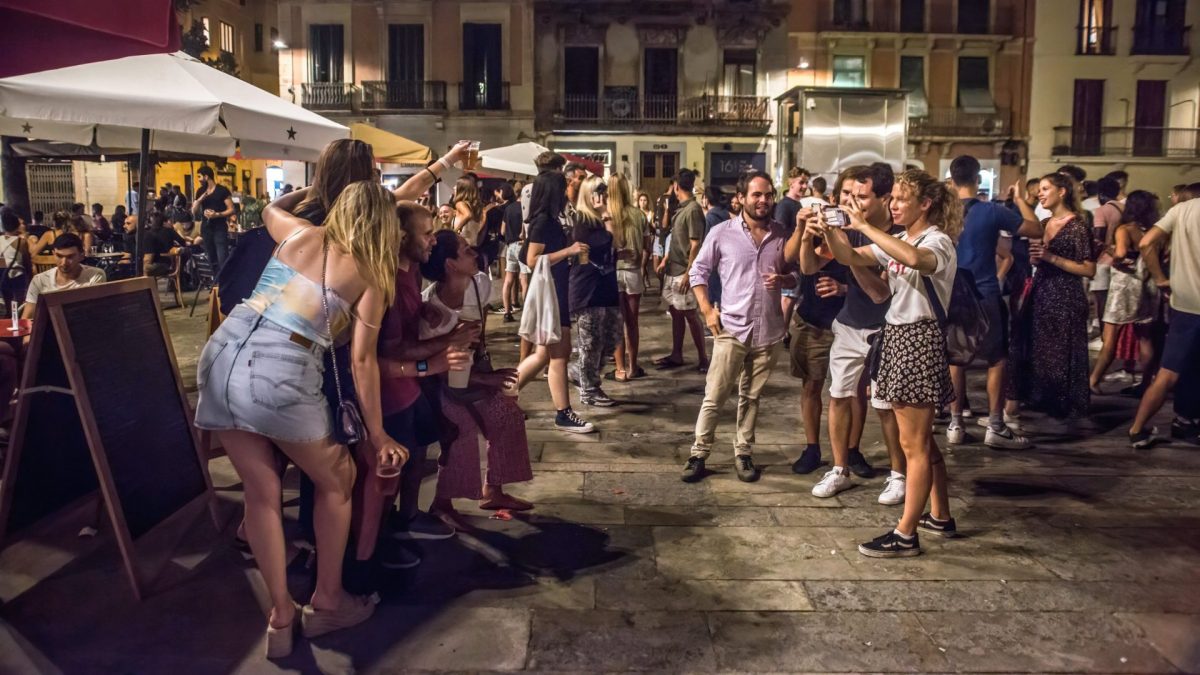
British tourists Barcelona decline, Digi Mart USA News (Barcelona, Spain): Once a favored destination for stag and hen nights from the United Kingdom, Barcelona appears to be losing its appeal for British tourists amid overtourism protests and rising costs.
After years of budget airline trips to the Spanish city, British holidaymakers are increasingly exploring lesser-known parts of Catalonia, including Girona, quieter areas of the Costa Brava and Sitges, and making day trips to Barcelona.
Britons were once the largest group of foreign tourists visiting Barcelona, but they have been replaced by Americans, according to José Antonio Donaire, the city council’s sustainable tourism commissioner. About 2.86 million US citizens visited the city last year, a rise of 0.5 per cent compared with 2024, according to council figures.
By contrast, 1.5 million Britons visited Barcelona in 2025, a year-on-year fall of 4.1 per cent. Since 2022, the share of UK holidaymakers among all visitors has steadily declined from 8.2 per cent four years ago to 7.5 per cent last year.
Council data for the city, which attracted 16 million tourists last year, only records overnight stays, not day trippers.
Donaire, a former academic who specialized in tourism, told The i Paper that more than 80 per cent of tourism in Barcelona is international. He said Barcelona has roughly the same number of international tourists as New York, though New York has far more overall because it receives many American visitors.
He added that Barcelona does not attract Spanish tourists in the same numbers, which he attributed to the city’s strong international reputation.
Donaire said the number of Asian tourists has grown in recent years, with visitors from China up 8.4 per cent last year to 536,048. He described the British and German markets, which together account for 7 per cent of visitors, as very important.
A Spain-based tourism chief familiar with the UK holiday market said Americans have been the top group for several years and that Britons are changing their habits. They are staying in other parts of Catalonia and making day trips to Barcelona.
A British owner of a holiday home said fewer UK tourists were booking her property on the outskirts of the city. She said she believed protests against overtourism might be deterring them.
Residents have staged demonstrations against mass tourism in recent years, involving water pistols, confrontations with British tourists and placards reading “Tourists Go Home.”
Xavier Pascuet, a sustainable tourism consultant, said price may play a role in the changing behavior of British and American visitors. He noted that Barcelona can be a starting point for a trip around Spain or a Mediterranean cruise, while travelers weighing a weekend in Barcelona or Lisbon may be swayed by hotel costs.
Barcelona plans to ban short-stay cruises, which dock for less than 12 hours, at a date yet to be determined, following protests over passengers crowding landmarks such as La Sagrada Familia while spending little money in the city. The number of cruise terminals is to be cut from five to seven by 2030, and the tourist tax for passengers will rise from €12 per day for short-haul cruises to €30 per day by 2030.
Currently, 1.68 million passengers take short-stay cruises to the city each year.
Despite the protests, Barcelona plans to expand its airport. If it receives the backing of the European Union, passenger numbers would rise from 55 million last year to as many as 70 million.
Donaire said airport expansion will not lead to a surge in tourists but will strengthen the city’s profile as an international business hub. He said the city council would not increase tourist accommodation above the current 156,000 places to sleep.
“There is an option to limit tourism, which is to limit supply,” he said.
Donaire described the tourist cap as the result of a decision made ten years ago, when the city did not want more visitors. He said roughly the same number of people stay in Barcelona today as did a decade ago.
Asked what would stop tourists from staying outside the city, he said the number of hotels in periphery towns was minimal.
Donaire said protests have been backed only by a minority, and that most residents view tourism more as a positive force than a negative one, according to council surveys. He described a recent protest that drew considerable media coverage as extremely small, involving a few dozen people, though it attracted international attention.
A survey published by the city council in February found that 76 per cent of residents questioned believed the city had reached saturation point with tourists. However, 75 per cent viewed tourism as a positive factor for the city.
Joan Manel, a spokesman for Zeroport, a campaign group opposing the expansion of the airport and cruise port, called the council’s position “nonsense.” He said expanding the airport would draw more visitors who stay outside the city and travel in by bus. He also said that while the port plans to cut terminals, capacity would increase, raising annual passengers from four million to five million.
The question now is whether British tourists will return in greater numbers or continue looking to other destinations.