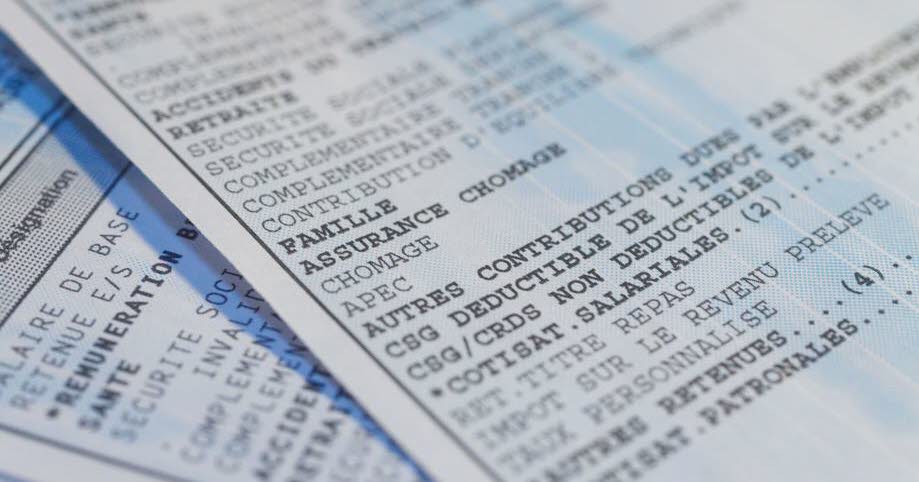
Rapprocher le salaire net du brut, Digi Mart USA News (France): The consensus across France’s political class is that work no longer pays adequately. To address the purchasing power crisis facing employees, some politicians are proposing changes to the small line items that make up the payslip.
Raphaël Glucksmann (PS-Place publique), Gabriel Attal (Renaissance), Édouard Philippe (Horizons), David Lisnard (Nouvelle Energie), Bruno Retailleau (LR) and Jordan Bardella (RN) have all expressed support for narrowing the gap between net and gross pay. The measure would reduce the difference between an employee’s gross salary, which should not be confused with the “superbrut” that also includes employer contributions, and the amount actually received.
That difference is mainly explained by contributions paid by the worker to pension funds, along with social contributions and levies such as the CSG and CRDS. Contrary to a common belief, the gross-to-net ratio “has remained broadly stable” between 1993 and 2026, according to the High Council for the Financing of Social Protection (HCFiPS).
The French tax wedge, the gap between what an employee costs an employer and what that employee actually earns, is one of the highest among OECD countries. It has tended to decline since the 2000s, thanks largely to reductions in social contributions.
Between the late 1980s and today, the share of social contributions in financing the Sécurité sociale fell from 90% to 49%. Other revenues come mainly from taxes or levies such as the CSG and VAT, which are paid by all French residents.
Édouard Philippe argues that the effort still rests too heavily on labor income and not enough on “the whole population,” and, like others, he wants to reduce social levies so that net pay moves closer to gross pay.
Unless the government is willing to increase the deficit, the revenue lost to the Sécurité sociale would need to be offset, either through cuts in public spending or through a system of offsetting measures. Gabriel Attal, for example, has proposed raising median net pay by 250 euros, but to finance this he would increase VAT, a so-called “social VAT,” and make new savings on unemployment insurance.
Raphaël Glucksmann would instead tax “mega inheritances” to allow a reduction in the CSG on salaries.
Olivier Faure of the PS has called the idea “a mistake,” warning during the Social Democratic primary against “an old liberal recipe” long supported by employers. Narrowing the gap between net and gross pay has the advantage of raising take-home pay without increasing the cost of labor, but the CGT union argues it would “reduce our social protection,” since net pay pays for the month’s bills and rent, while gross pay covers the whole of life in cases of illness, unemployment, retirement and parenthood.
Critics say such a measure could weaken the social model, which has historically rested on workers. The Observatoire de la justice fiscale, created by the association Attac, warns it could even lead to a shift toward private insurance.
Behind the debate lies a broader societal choice about the level and distribution of financing for France’s social protection system.